
That’s where hands-on healthcare programs are transforming learning into practice, and Toledo Pre-Medical and Health Science Academy leads the way. Ranked fifth in Ohio for college readiness and among the top twenty percent nationwide with five-star rating, the academy bridges the gap between education and workforce.
Seventeen-year-old Rozanae is one shining example. Each morning, she walks into school not just as a student but as a nurse in training. With more than forty college credits completed, she’s only two classes away from becoming a licensed practical nurse. Each year, students like her choose this academy as it offers the opportunity to build a future in healthcare with real tools, labs and certified experience while still being in high school.
“There is a disconnect between traditional education and the modern workforce. We are filling that gap by giving students the tools, skills and credentials they need to thrive,” says Jack Hunter, principal.
An Early Curriculum with Purpose
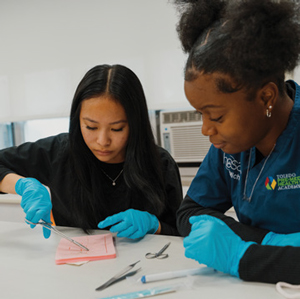 The academy’s curriculum, based on the nationally recognized Project Lead the Way, puts project-based learning and career exploration first. In seventh grade students explore real-world medical problems. Whether developing orthotics to enhance mobility or adaptive toys to support children with cerebral palsy, each project fosters a blend of clinical creativity and real-world application.
By eighth grade, the emphasis moves to clinical skills. Students are trained to record blood pressure, take vital signs, and determining potential causes of illness by case-based learning. In ninth grade, the students are trained in forensic science, where lab work includes DNA analysis and evidence evaluation.
During their tenth-grade, students make an important transition, taking college-credit courses in human anatomy and medical terminology and choosing one of three focused career pathways. Pharmacy and biomedical science offer the chance to pursue a technician license. Nursing and patient care include preparation for state tested nurse assistant certification and hands-on experience in sterile processing. The athletic training and kinesiology leads to credentials as personal trainers, referees and physical therapy aides. These programs ensure that students don’t just learn about healthcare but begin living it. Many graduate with certifications in hand, take up part-time roles in clinics or pharmacies, or carry forward college credits that ease their journey into higher education.
-
There is a disconnect between traditional education and the modern workforce. We are filling that gap by giving students the tools, skills and credentials they need to thrive.
Equity and inclusion are central to the academy’s design. The student body reflects the diverse demographics of the city it serves, creating a learning community where different perspectives strengthen understanding and leadership. This harmony between education and representation ensures that every student feels seen, supported and prepared to thrive in the healthcare field.
Strong Partnerships and a Path to Workforce
The academy has built a strong network of community partners, giving students real-world exposure through thirty hours of healthcare-related service in hospitals and clinics. The students volunteer and intern at ProMedica, Mercy Health, and Nationwide Children’s Hospital, institutions that provide hands-on experience and career opportunities after graduation, helping them take their first steps into the healthcare workforce.
This connection between education and experience is strengthened by the active involvement of families. An advisory board made up of parents and healthcare professionals helps guide the curriculum to align with current industry needs. Parents also play an important role in selecting college courses for their children and remain engaged throughout their academic journey, creating a support system that bridges home, school and career readiness.
Together, the partnership between students, families and healthcare institutions define what makes Toledo Pre-Medical and Health Science Academy more than a school. For students like Rozanae, it marks the beginning of a career built on real-world experience, industry credentials and the confidence to make an immediate impact. Learning here extends beyond the classroom, turning possibility into tangible opportunity and preparing the next generation of healthcare leaders to step in and lead from day one.